The Grenadines: the Caribbean sailing dream
The Grenadines are a string of islands and islets between Saint Vincent and Grenada, largely untouched by mass tourism. Turquoise lagoons, sheltered anchorages, deserted beaches where you drop anchor for the night. It's the perfect playground for a sailing or catamaran trip. But between the different formulas, the possible stops and the logistical questions, it can be hard to know where to start. Here's what I tell my clients before they set sail.
Catamaran or monohull: which to choose?
This is the first question everyone asks me. The answer depends on your group and how you like to travel.
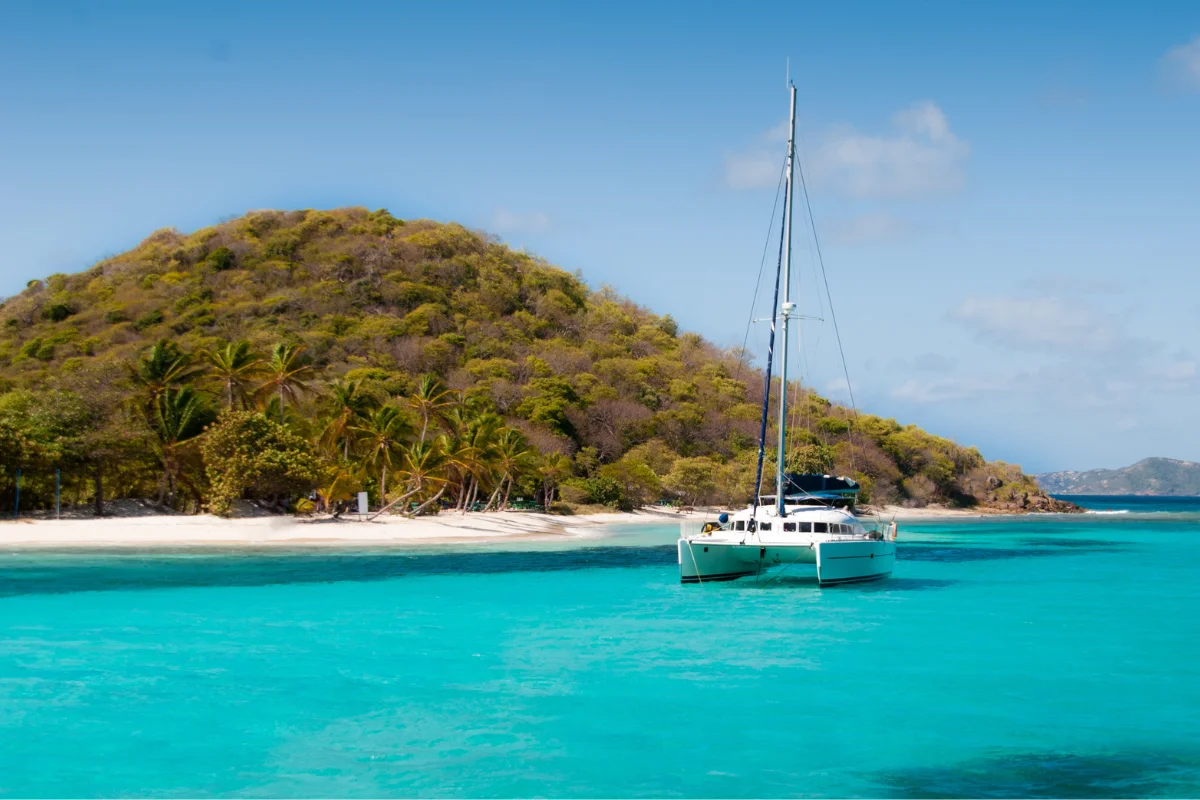
A catamaran offers more space and stability. Ideal for families, groups of 4 to 8, and those who want to enjoy the boat as a comfortable base. The cockpits are larger, the cabins less cramped, and the rolling motion is almost nonexistent. It's also what most people charter in the Caribbean.
A monohull is more manoeuvrable, faster on a beat, and often cheaper to charter. It requires a bit more physical engagement, but the sailing experience is more authentic. For groups of 2 to 4 who genuinely love sailing, it's often the better choice.
Mégane's tip
For a first Caribbean sailing trip with no maritime experience, choose a catamaran with a skipper. You'll enjoy the journey without the stress of navigation, and you can learn on the way if you wish.
With skipper or bareboat?
Chartering bareboat (without skipper) is possible if at least one person in the group holds an offshore sailing licence validated by the charter company. The Grenadines are known as a fairly forgiving sailing area, with steady trade winds and well-marked anchorages.
With a professional skipper, everything changes. You benefit from his local knowledge to choose the best anchorages for the season, the less-visited coves, the good beach restaurants and the tidal timings. Allow between 250 and 350 euros per day for a skipper, which splits easily across the group.
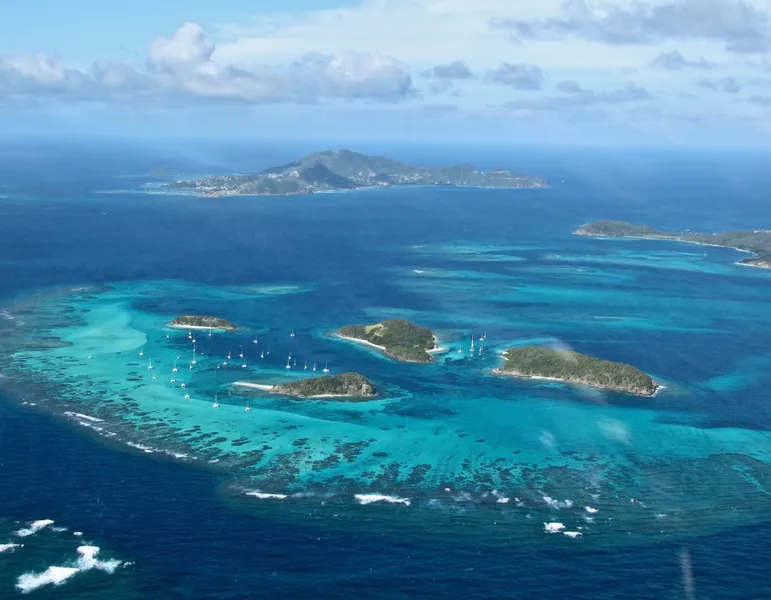
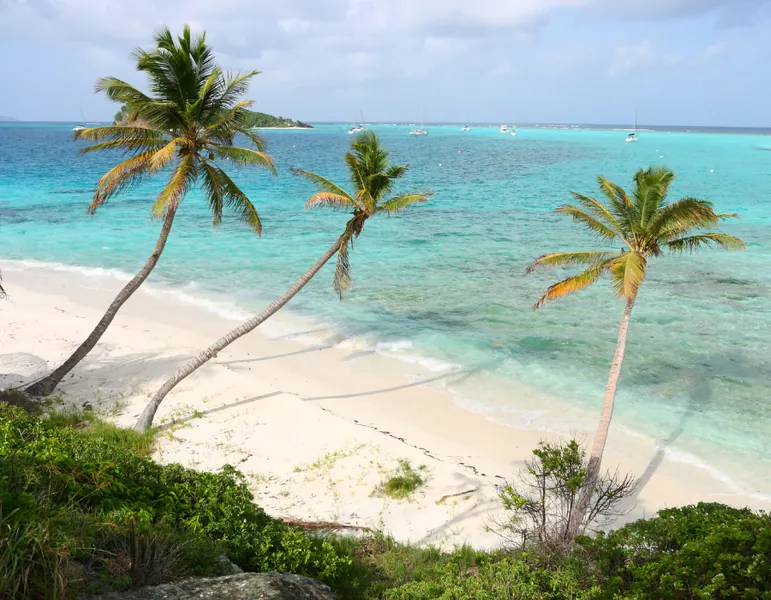
The Tobago Cays, jewel of the Grenadines and protected marine park.
The unmissable stops
The classic route runs from Martinique to Saint Vincent or Bequia southward, down to Union Island. The stops I always include in my clients' itineraries:
- Bequia: the most charming island in the archipelago, with its lively Port Elizabeth harbour
- Mustique: legendary private island, half a day's stop is enough to understand its reputation
- Canouan: an absolutely beautiful lagoon, lightly visited, ideal for a night in the middle of nowhere
- The Tobago Cays: the archipelago's protected marine park, crystal-clear waters and sea turtles guaranteed
- Mayreau: a fishing village on a hill, a deserted beach at the bottom and a timeless atmosphere
- Union Island: the last port before heading back, with its market and very lively marina bars
Port Elizabeth in Bequia, the first iconic anchorage on the Grenadines route.
Budget and ideal duration
10 days is the minimum to sail between Martinique and the Grenadines without feeling rushed. Two weeks let you breathe, spend two nights at anchorages you love and explore the islands on foot.
For a 4-cabin catamaran with skipper, allow between 4,000 and 7,000 euros per week depending on the season and the boat. Divided among the group. High season runs from December to April. Low season (May to November) is cheaper but hurricane risk exists between August and October.
Essential tips before you go
- Book your boat at least 6 months ahead in high season: the best catamarans go very quickly
- Budget for mooring and marine park fees
- Bring provisions for the first few days, or for the whole trip if you're going without a chef on board. Grocery shops are rare outside Bequia and Union Island
- Bring cash in Eastern Caribbean or US dollars: few islands accept cards
- Take out cancellation insurance: in case of hurricane or unforeseen events, it's essential
Would you like me to organise your Grenadines sailing trip from start to finish? Discover my travel planning services for your Grenadines sailing trip.